
Replacing your windows in 2026 is more than a renovation – it’s a long-term investment in comfort, efficiency, and design. Modern windows are high-performance systems that influence your home’s energy use, sound levels, and curb appeal. According to Natural Resources Canada, energy-efficient windows can significantly reduce heating costs in cold climates by limiting heat loss through glass and frames. But between technical labels, material choices, and installation methods, the process can quickly become overwhelming.
This printable checklist organizes the entire project into clear, manageable steps – from early research through installation. It’s designed to help homeowners make confident decisions, avoid costly errors, and ensure every window performs exactly as promised.
Planning Your Window Project
A buyer’s checklist is not just a list of styles or prices – it’s a project map. It prompts you to define your goals, compare products by performance, ask contractors the right questions, and verify every step before signing a contract.
Used properly, it ensures that every decision supports your specific goals, whether that’s lowering energy bills, improving comfort, or refreshing your home’s appearance.
Why Organization Matters
Window replacement is a rare investment – most homeowners only do it once. A rushed choice or a missing detail can have long-term consequences. This checklist helps you:
- Avoid common pitfalls. Choosing the wrong glass package or overlooking egress code requirements can delay projects or reduce efficiency.
- Maximize your return. Comparing certified ratings and warranty terms ensures you’re paying for measurable performance, not marketing.
- Standardize your quotes. With clear criteria, it’s easier to compare installers on equal footing.
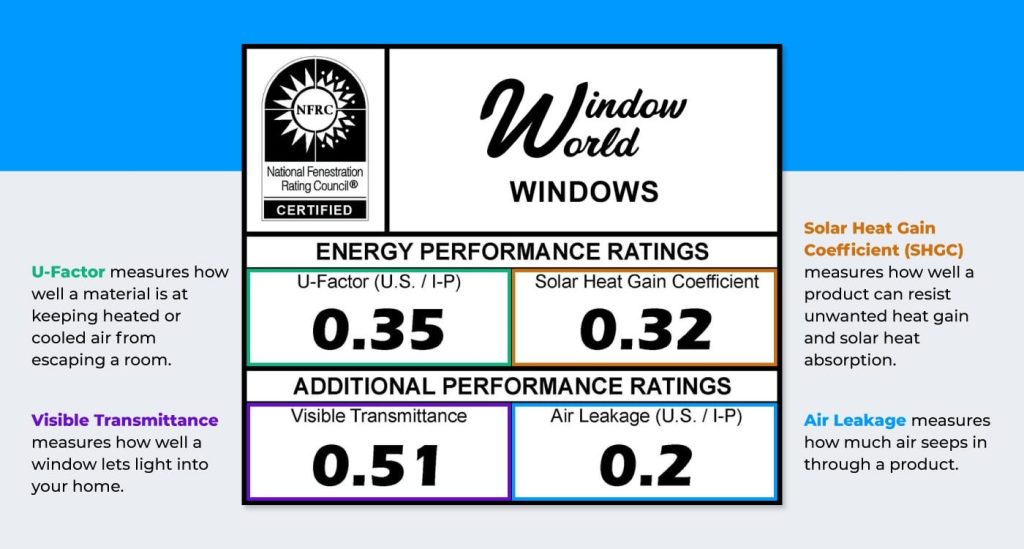
- Match windows to climate. Whether you live in a cold northern region or a warm, sunny zone, the right combination of U-Factor and SHGC is key. The U.S. Department of Energy’s Energy Saver program notes that lower U-Factors reduce heat loss in winter, while lower SHGC values help block unwanted solar heat in summer.
Comparing Frame Materials
Frame material influences energy performance, appearance, and long-term maintenance. Use the table below to narrow your options before comparing models.
| Parameter | Vinyl | Fiberglass | Wood-Clad (Aluminum/Fiberglass Exterior) |
| Cost | Low to medium | High | Very high |
| Durability | Good (can warp in dark colors) | Excellent (stable, no warping) | Excellent (durable exterior) |
| Maintenance | Low | Low | Low exterior / medium interior |
| Efficiency | Good to excellent (foam-filled) | Excellent | Excellent |
Vinyl remains cost-effective for most standard replacements, while fiberglass offers superior rigidity and longevity. Wood-clad designs are ideal when aesthetics and authenticity matter most.
The 2026 Window Buyer’s Checklist
Phase 1: Planning and Research
- Define your goal: Is your focus energy savings, sound control, or architectural design?
- Set your budget: Include a 10-15% contingency for hidden repairs or trim work.
- Identify the project type: Retrofit (insert) or full-frame replacement.
- Rough measurements: Enough for estimates, though final measurements should be verified by the installer.
- Check egress requirements: Bedrooms and basement spaces must meet code-defined escape dimensions.
Phase 2: Window Selection
- Frame Material: Choose based on performance, cost, and design compatibility.
- Glass Package:
- U-Factor: Lower is better for retaining heat in cold climates.
- SHGC (Solar Heat Gain Coefficient): Lower is better for blocking solar heat in hot climates.
- ENERGY STAR certification: Confirm it matches your regional zone.
- Glazing Options: Double or triple pane; consider laminated glass for noise or safety.
- Gas Fill: Argon is standard; Krypton offers higher efficiency for narrow gaps.
- Style and Function: Casement, double-hung, picture, or sliding based on airflow and use.
- Grilles and Hardware: Match architectural style; test for smooth operation and solid locks.
Phase 3: Installer and Quote Verification
- Get at least three quotes. Each should include identical specifications for accurate comparison.
- Verify credentials: Ask for proof of insurance, certifications, and recent local references.
- Review the scope of work: Ensure it specifies window models, performance ratings, and detailed installation methods (flashing, insulation, sealant).
- Examine the warranty: Clarify what’s covered (glass seals, hardware, labor), and whether it’s prorated or transferable.
Common Buyer Mistakes
- Choosing on price alone: Low-cost products or installers often sacrifice quality and insulation performance.
- Ignoring installation quality: Even the best window fails if poorly installed.
- Misreading labels: U-Factor and SHGC ratings must suit your regional climate.
- Overlooking the fine print: Some warranties exclude labor or finish defects – details matter.
The “Best” vs. the “Right” Window
Homeowners often search for the “best window,” but what matters most is the right one for your home and region. A triple-pane unit with the lowest U-Factor might outperform in northern climates, but it could underperform in a mild or coastal zone.
For most projects, a high-quality double-pane window with low-E coating, argon gas, and professional installation strikes the ideal balance between cost and efficiency. The right window is the one that meets your specific needs, not the one with the longest list of features. As the World Health Organization emphasizes, well-insulated, properly ventilated housing plays a major role in maintaining healthy indoor air and energy-efficient living conditions worldwide.
Standards and Quality Assurance
Reliable products and installations are verified through independent testing. Look for certifications from national or international standards organizations that evaluate performance, safety, and durability. The CSA Group develops and maintains rigorous testing standards for windows and building materials across Canada, ensuring safety and performance consistency under diverse climatic conditions.
Testing by groups such as the Canadian Standards Association (CSA) or the International Organization for Standardization (ISO) ensures your product meets rigorous energy and material benchmarks.
Frequently Asked Questions (FAQ)
1. What is the most important part of the ultimate 2026 window buyer’s checklist?
There are two:
1) Verifying the window’s certified performance ratings (U-Factor and SHGC) for your climate.
2) Thoroughly vetting your installer’s insurance, certifications, and references.
2. How do I choose the best window for my climate?
It is simple: In a cold climate (like most of Canada), your primary focus is a low U-Factor to keep heat in. In a hot climate, your primary focus is a low SHGC to keep solar heat out.2
3. What are the advantages and disadvantages of using a checklist?
- Advantages: Keeps you organized, prevents costly mistakes, helps you compare quotes fairly, and ensures you do not forget critical items like warranties or installation details.
- Disadvantages: A checklist cannot replace the advice of a qualified, trustworthy professional. It is a tool to help you find that professional.
Conclusion
Buying new windows doesn’t have to be confusing. A structured checklist turns a complex renovation into a clear, confident process. By defining goals, verifying performance, and insisting on professional installation, you’ll secure lasting energy savings and a quieter, more comfortable home.

Use this printable guide as your roadmap – from the first consultation to the final inspection – and your 2026 window upgrade will deliver beauty, performance, and value for decades ahead.For more general information on window components and types, you can visit authoritative sources such as Wikipedia’s page on Windows.