
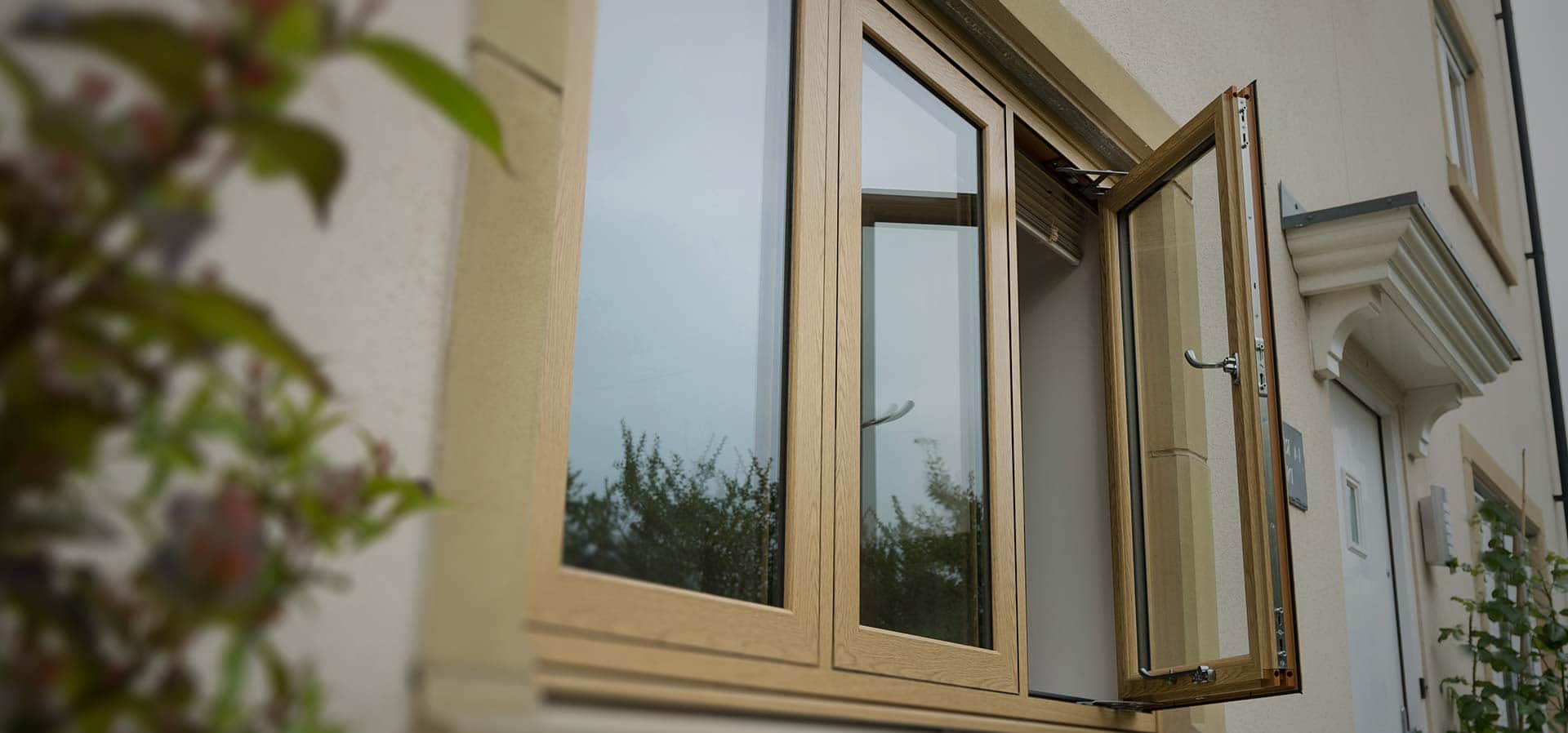
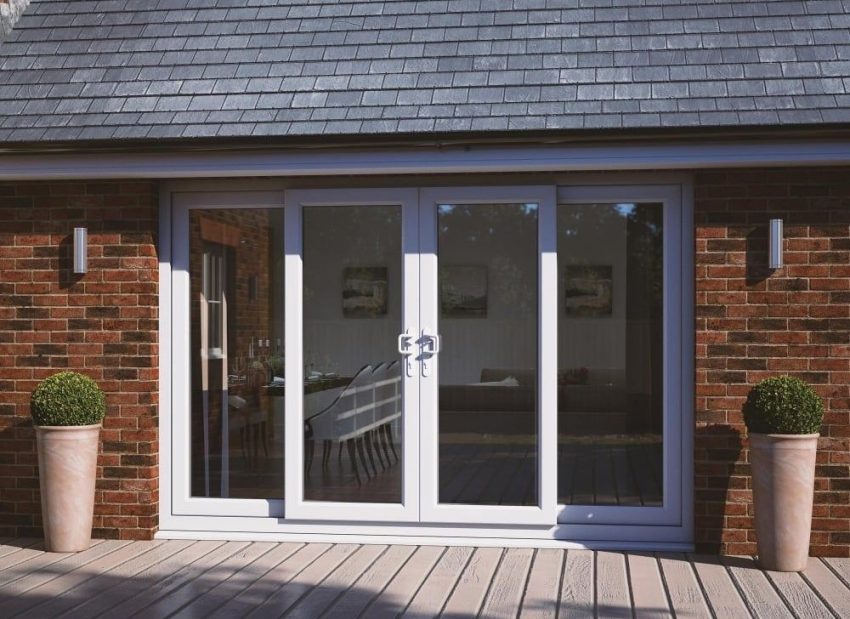
Patio doors bring light, connection, and ease to daily living. Their broad glass panels frame the outdoors and blur the line between inside and out. Yet those same design features can create vulnerabilities. Large panes, simple latches, and easy access from the backyard make patio doors a common weak point in home security.
Modern building science and hardware design now offer ways to enjoy openness without compromising safety. Upgrading a patio door’s security involves more than a stronger lock – it’s about combining multiple layers: locking systems, reinforced glazing, and smart sensors that work together to resist intrusion and provide peace of mind.
Building a Secure Door System
A patio door’s security depends on how well its parts work as one. Relying on a single improvement, such as a new deadbolt, often misses the bigger picture. The three key components that define true security are multi-point locks, laminated glass, and sensor technology.
1. Multi-point locking systems.
Instead of relying on one latch, a multi-point system secures the door at several points along the frame. When you lift the handle or turn the key, hooks or bolts engage at the top, center, and bottom of the door panel. This distributes force evenly and makes prying or lifting nearly impossible.
2. Laminated glass.
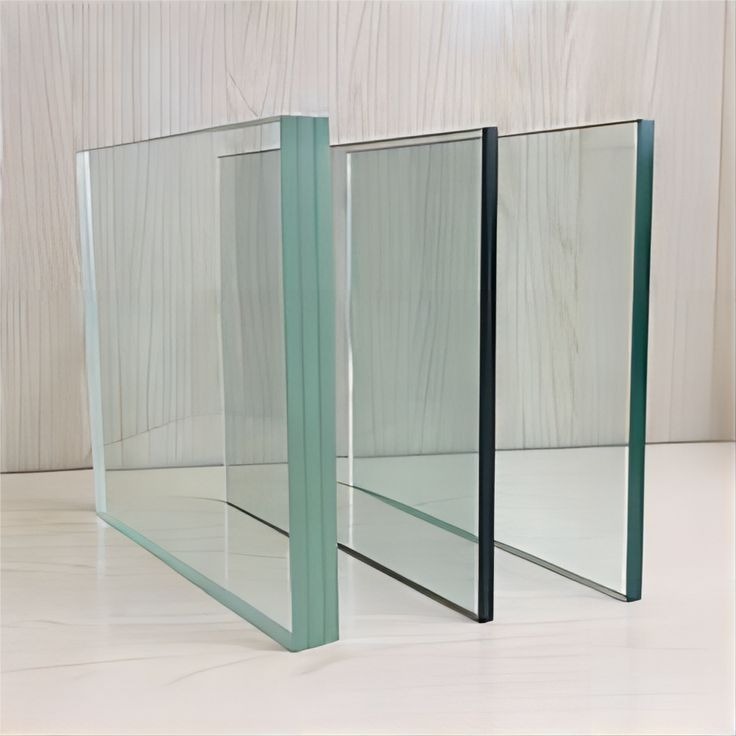
Laminated glass is built like a safety shield. It combines two sheets of glass with a clear, flexible interlayer of polyvinyl butyral (PVB). If struck, the glass may crack, but the interlayer keeps the fragments bonded, preventing a quick entry. It’s the same principle used in car windshields – designed to hold together even under impact.
3. Security sensors.
Electronic sensors add an intelligent layer of protection.
- Contact sensors detect when the door is opened by monitoring the connection between the frame and sash.
- Glass-break sensors listen for the distinct frequency of breaking glass and trigger an alert the moment it happens.
Together, they provide instant awareness even if you’re away from home.
Why These Upgrades Matter
Patio doors are among the most used and most targeted access points in a home. Their large glass panels and ground-level position make them tempting for intruders – especially older models with simple latches or non-tempered glass. Data from the Office for National Statistics show that a significant share of residential burglaries involve entry through doors and windows, confirming the importance of reinforcing these vulnerable points with stronger glass and locks.
Deterrence and delay are key. A visible multi-point lock and laminated glass deter attempts before they start. Even if a break-in is attempted, the reinforced glazing slows progress and increases noise, discouraging follow-through.
Beyond safety, there are side benefits: laminated glass also dampens exterior noise and blocks most ultraviolet rays, protecting floors and furniture from fading while keeping indoor spaces quieter.
Comparing Security Options
| Parameter | Multi-Point Lock | Laminated Glass | Security Sensors |
| Security Function | Prevents prying or lifting | Resists breakage | Detects and alerts |
| Deterrence Level | High (visible hardware) | High (physical barrier) | Medium (monitoring) |
| Typical Cost | Medium to high | High | Low to medium |
| Primary Benefit | Reinforced locking | Shatter resistance | Real-time awareness |
Each element serves a distinct role. The lock prevents forced entry, the glass resists breakage, and sensors ensure you’re informed the moment a breach is attempted.
Choosing a Complete Strategy
The most reliable approach is a layered one.
- Start with the lock: A multi-point locking system should be considered standard on any quality patio door. It strengthens the door frame and prevents levering or lifting.
- Upgrade the glass: If your door has standard tempered glass, upgrading to laminated glass greatly increases resistance to forced entry. It’s a particularly worthwhile investment for doors facing backyards, alleys, or less-visible areas.
- Add smart protection: Sensors are the simplest upgrade and can be added to almost any existing door. Even an older patio door becomes part of a modern, monitored system with a few inexpensive devices.
- Match your door type:
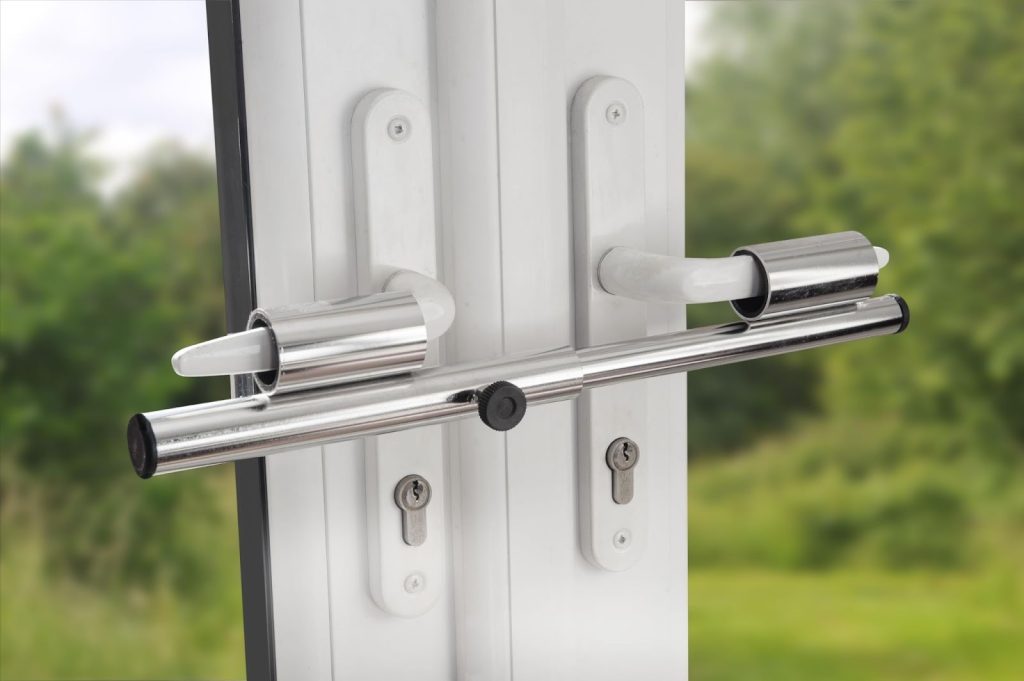
- Sliding doors: A multi-point lock is essential. Adding a secondary bar in the track – often called a charley bar – provides extra visible security.
- French doors: Use a locking system that secures the passive panel at both the head and sill. This prevents forced separation between the two doors.
Mistakes to Avoid
- Focusing only on the lock: Strong hardware won’t help if the glass breaks easily.
- Ignoring the frame: Even the best door is only as strong as the material it’s anchored to. Weak or rotted frames can fail under force.
- Using standard latches: Builder-grade latches on sliding doors offer minimal resistance.
- Skipping sensors: Without detection, you’ll only know about a breach after it happens.
Smart Locks and Traditional Hardware
Smart locks are gaining popularity, offering convenience through remote control and alerts. They let you check lock status or grant temporary access via your phone. However, the lock’s physical mechanism remains the real source of security.
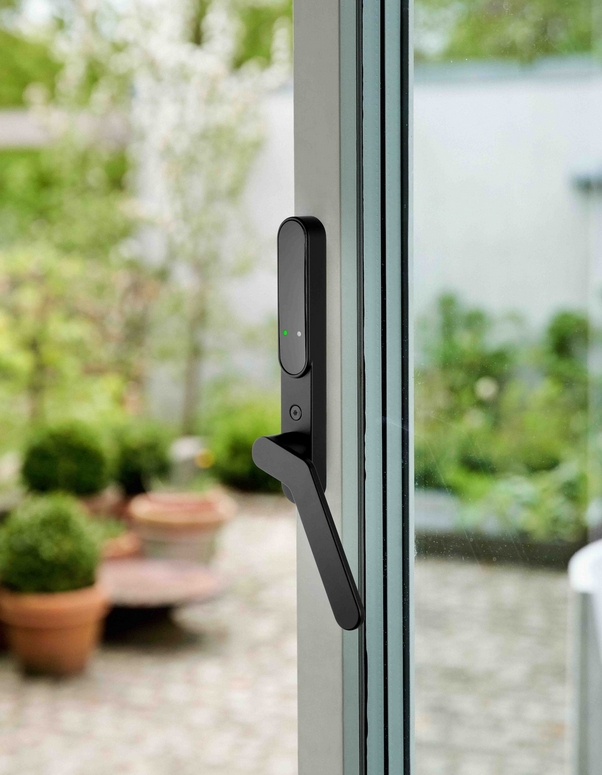
The most reliable setup pairs a solid multi-point mechanical system with an electronic interface. Avoid depending solely on electronics for strength – digital features should enhance, not replace, robust physical hardware.
Tested and Certified Protection
Look for products verified through independent testing. Multi-point locks and hinges should meet performance standards from organizations such as ANSI or BHMA, which test for durability and forced-entry resistance. International and national building standards reinforce these expectations. The Scottish Government’s Building Standards Handbook outlines door security classifications that require locks and hinges capable of withstanding repeated forced-entry tests – benchmarks mirrored in most North American building codes.
Laminated glass must meet safety glazing standards and follow manufacturing quality controls established by international organizations like ISO. Complete door systems are also tested under CSA guidelines for structural integrity and air- and water-tightness.
Frequently Asked Questions (FAQ)
1. What are the most important security upgrades for patio doors?
A layered approach is best. Start with a multi-point locking system to prevent prying, upgrade to laminated glass to prevent smashing, and add sensors to notify you of any breach.
2. How do I choose the best lock for my patio door?
A multi-point locking system is always superior to a single deadbolt or latch. For a sliding door, supplement this with a high-quality, track-mounted security bar.
3. What are the advantages and disadvantages of laminated glass?
- Advantages: Extremely high resistance to forced entry, blocks 99%+ of UV rays, and provides excellent sound insulation.
- Disadvantages: It is a premium option, so it has a higher upfront cost and is heavier than a standard glass unit.
Conclusion
A secure patio door doesn’t mean giving up on openness or design. It means approaching security as a complete system – combining mechanical strength, impact-resistant glazing, and smart detection.
By integrating multi-point locks, laminated glass, and discreet sensors, homeowners can enjoy the light and accessibility of patio doors without sacrificing safety. The result is a home that feels open, connected, and confidently secure.For more information on the technical properties of this security glass, you can visit authoritative sources such as Wikipedia’s page on Laminated Glass.